Titanium is not hard to machine because it is strong — it is hard to machine because it refuses to let the heat leave the cut. Most of the heat generated at the tool edge in a metal like aluminum gets carried away in the chip. In titanium, the chip is short, the material's thermal conductivity is low, and the heat has nowhere to go except back into the cutting tool. The result is a tool that dulls at a low surface speed, a part that can work-harden or burn, and a machine that runs the same feature at a fraction of the feed it would use on steel. The discipline of machining titanium is entirely about managing that trapped heat: low speeds, a steady and meaningful feed, flood coolant aimed at the edge, sharp carbide, and toolpaths that never let the tool sit and rub. This guide lays out the speeds, feeds, coolant, and tooling decisions that separate a titanium job that runs clean from one that eats cutters.
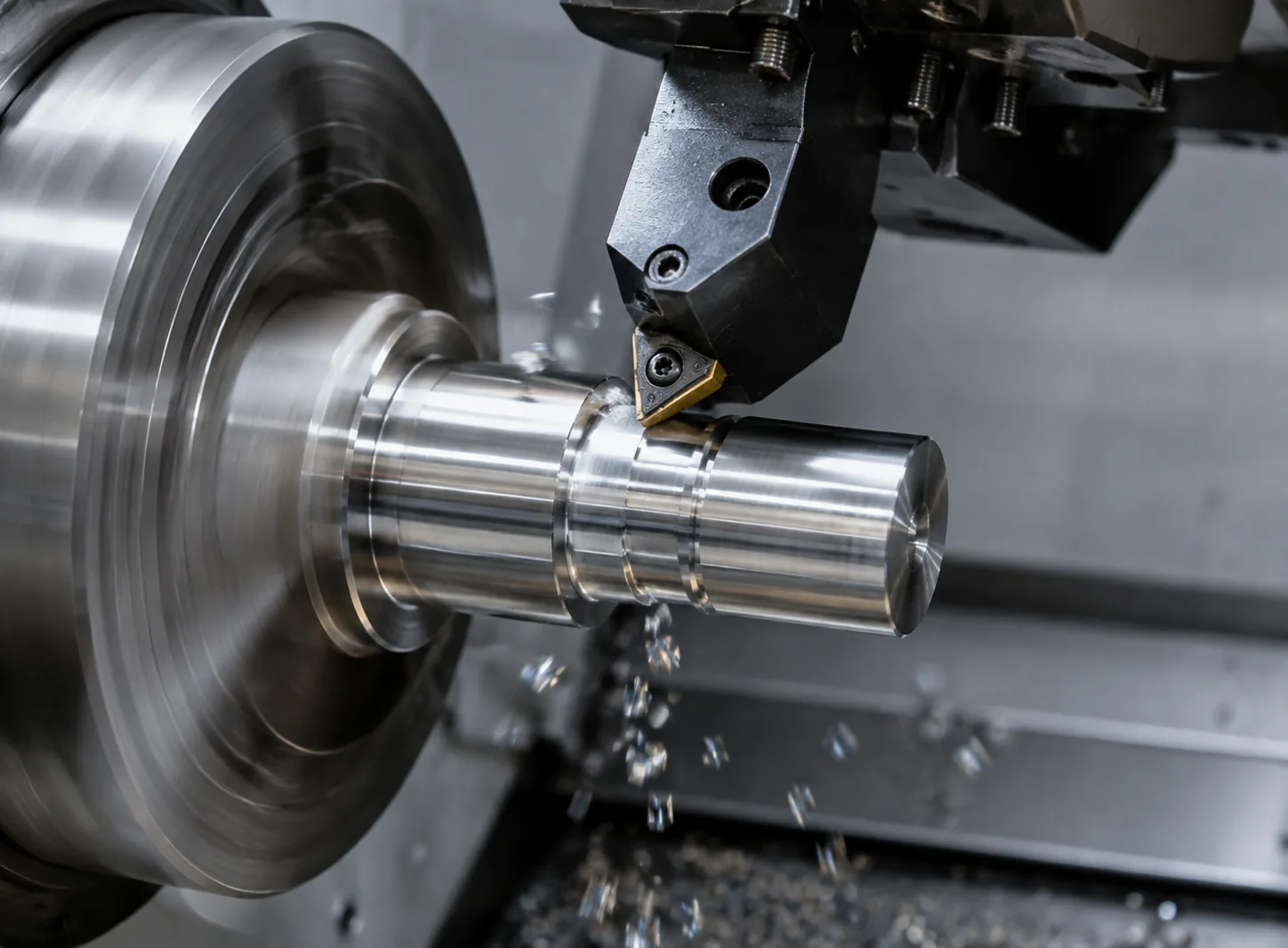
Why titanium behaves the way it does in the cut
Titanium's machining problems all trace back to two physical facts. The first is low thermal conductivity: titanium conducts heat roughly one-sixth as well as steel and far less than aluminum, so the heat generated at the shear zone cannot dissipate into the surrounding material the way it does in a more conductive metal. The second is that titanium stays strong at elevated temperature, so the tool keeps meeting a work-hardening, hot, and still-strong material instead of a softened one. Put those together and the cutting edge sees a concentrated hot spot that it cannot shed, which is what causes the tool to wear by cratering, flank wear, and built-up edge rather than by simple abrasion.
The practical consequence is a ceiling on surface speed. Where aluminum can be milled at hundreds of meters per minute, titanium is usually held to a small fraction of that — commonly on the order of tens of meters per minute for carbide, and lower still for the harder grades. Feed, by contrast, is kept comparatively high for the material's strength, because a light feed means the tool rubs instead of shears and the rubbing only concentrates more heat in one place. The machinist's instinct to back off both speed and feed when a cut fights back is exactly wrong on titanium: you drop the speed and keep, or even raise, the feed per tooth so the edge stays buried in work instead of skating on top of it.
Speeds, feeds, and the numbers that keep a job alive
The exact numbers depend on the grade and the tooling, but the shape of the recipe is consistent across the titanium alloys. Surface speed is the lever you protect first: it is the single biggest driver of edge temperature, and lowering it is the most direct way to stop the tool from cooking. Feed per tooth is the second lever, and on titanium it should be generous enough to produce a proper chip rather than a dust of rubbing. Depth of cut is the third, and while titanium tolerates a reasonable axial engagement, the cut must stay engaged — a tool that dwells or reverses against the work burns in seconds.
A useful working set for a general-purpose carbide end mill in a common titanium alloy is a surface speed on the low end of the carbide range, a feed per tooth that keeps the edge loaded, and a chip load that is consistent rather than starved. The exact values are always dialed against the machine's rigidity, the tool's coating, and the coolant, but the direction of travel never changes: speed down, feed steady, engagement constant. A shop that tries to run titanium at aluminum speeds will go through a drawer of end mills in an afternoon and still not hold the tolerance.
| Parameter | Direction on titanium | Why it matters |
|---|---|---|
| Surface speed | Low — a fraction of steel or aluminum | Edge temperature is the main driver of tool failure |
| Feed per tooth | Steady and generous, not starved | A light feed makes the tool rub and concentrate heat |
| Depth / width of cut | Constant, engaged cut | Dwell or rub burns the edge in seconds |
| Coolant | Flood, aimed at the cutting zone | Carries heat away the material will not |
| Tooling | Sharp, coated carbide, low runout | Dull edges and runout both multiply heat |
| Toolpath | Climb milling, no full-width slot | Climb milling exits the chip cleanly, less recutting |
Coolant and chip control — carrying the heat away
Because the material will not carry heat away on its own, the coolant has to do the job, and it has to be delivered where the heat actually is — at the cutting edge, not somewhere near the part. Flood coolant at a high flow rate is the baseline, aimed directly at the shear zone so it floods the gap between tool and work and carries both heat and chip out of the cut. A mist or a weak stream is not enough on titanium; the volume matters because the coolant is doing double duty as a heat sink and a chip evacuator.
Chip control is the second half of the same problem. Titanium chips are short and stiff, and if they are not cleared from the cutting zone they get recut, which re-rolls them back under the edge and drives the temperature up again. Deep slots and pockets are the worst offenders, because the chip has nowhere to go. The answer is toolpaths that give the chip an escape route — a smaller radial engagement, a toolpath that opens the pocket from the inside out, and coolant or air directed to flush the chips out as they form. On a deep pocket, the rule is to keep the chip from ever being trapped, because a trapped titanium chip quickly becomes a welded lump on the tool.
Tooling choices that survive the heat
The tool matters more on titanium than on almost any other material, because there is no headroom to compensate for a bad cutter. Sharp, coated solid carbide is the working baseline: the edge must be genuinely sharp rather than honed dull, because a dull edge rubs, and rubbing is what generates the heat in the first place. A suitable coating — one that resists the high temperature and reduces the tendency of the titanium to adhere to the tool — protects the edge without making it blunt. Runout in the holder is the silent killer: a tool that runs even slightly off-center puts all the work on one flute, overloads it, and fails it early, so the holder and the tool must be checked for runout before the first part.
Geometry is the next decision. Fewer flutes with more chip room often beat more flutes on titanium, because the material's chips need somewhere to go and a packed gullet is a heat trap. A stronger core and a positive rake let the tool shear the material rather than bulldoze it, which lowers the cutting force and the temperature. And the strategy of the toolpath is part of the tooling decision: climb milling wherever possible, because it enters the cut cleanly and exits without recutting, and a radial engagement well below full width so the tool spends time out of the cut cooling instead of buried in it for an entire revolution.
Holding tolerance while the part warms up
Heat does not only kill the tool — it also moves the part. Titanium expands and holds its strength, so a part that heats up during a heavy cut will measure differently hot than cold, and a thin wall or a long slender feature can spring as the internal stress and the thermal growth fight each other. The way to hold a tight tolerance on titanium is to stage the work: rough the part while it can still move, let it settle, then finish with light passes that generate little heat and take the final size on a cool, stable part.
Rigidity is the other half of accuracy. Titanium's high strength means the cutting forces stay high even at the low speeds, so the setup has to be stiff — a short tool, a rigid holder, and a workholding arrangement that does not let the part deflect under the load. A thin titanium web will sing and deflect if it is not supported, and the chatter that follows both ruins the finish and chips the tool. Planning the roughing to leave an even, stress-relieved skin, then finishing with light, well-supported passes, is how a titanium part comes out both accurate and stable.
- Drop the surface speed before anything else — it is the main driver of edge temperature on titanium.
- Keep a steady, generous feed per tooth — a starved feed makes the tool rub and concentrate heat.
- Flood the cutting zone with coolant — titanium will not carry heat away on its own.
- Use sharp, coated carbide with low runout — a dull or off-center tool fails early.
- Climb mill and avoid full-width slots — let the chip exit and the tool cool between passes.
- Rough, settle, then finish light — take final size on a cool, stable part.
- Keep the setup rigid — titanium's high strength means high cutting forces and deflection.
"Titanium does not punish you for cutting it too slowly — it punishes you for cutting it too fast, and for letting the tool sit still. The whole craft is to keep the edge moving through work at a speed the heat can tolerate, with coolant that actually reaches the cut and a chip that is never trapped. Run the speed low, keep the feed loaded, flood the edge, and climb mill out of every pass, and a titanium job runs as calmly as a piece of steel. Chase aluminum speeds and it will eat cutters until you stop."
Machining titanium is a heat-management problem wearing a strength problem's clothes. Once you accept that the material will not carry its own heat away, every other decision follows: low surface speed to protect the edge, a real feed to keep it shearing, flood coolant to do the heat sinking, sharp rigid tooling to keep the cut clean, and staged rough-and-finish passes so the part holds size when it is cold. Do those things and titanium is simply a slower material, not a hostile one.
If you have a titanium part — a bracket, a fitting, a thin-wall housing, or a component that has to be light and strong — send the drawing over and we will plan the speeds, tooling, and workholding around the material, from the machining strategy to the finish and the inspection that confirms the part held size.